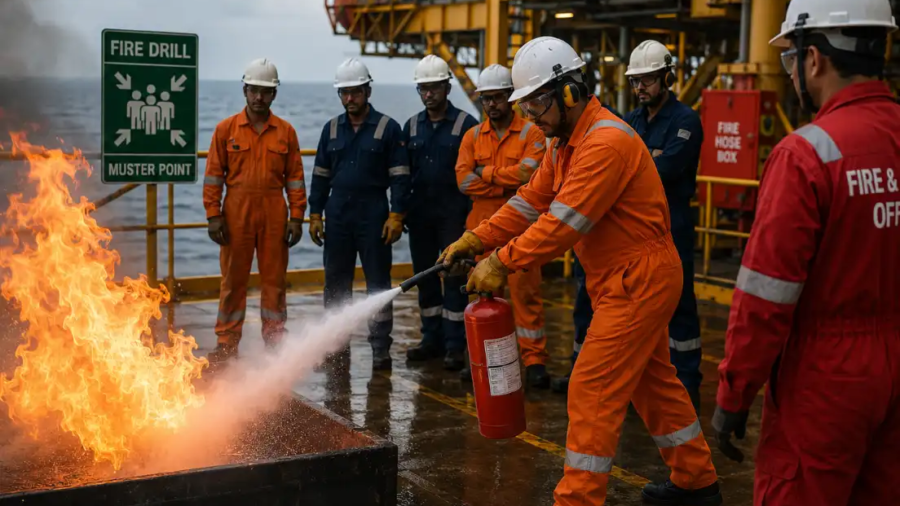
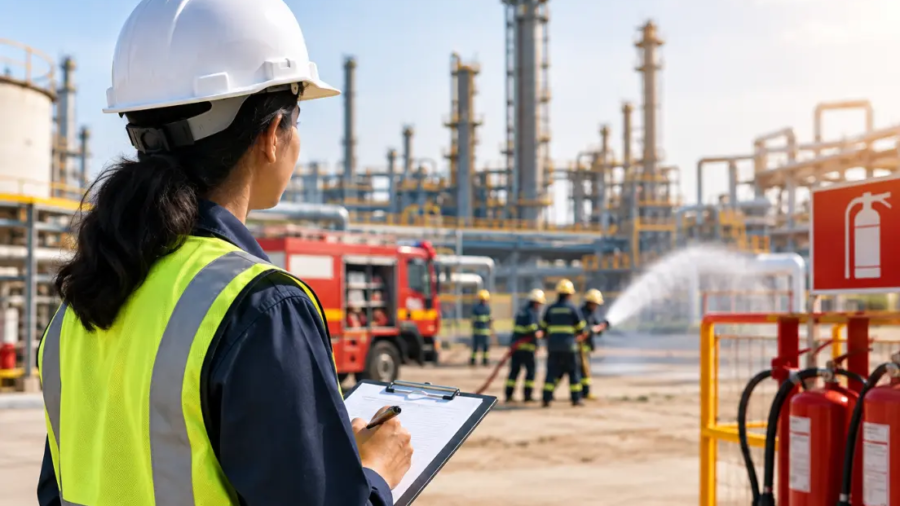
Every industrial plant, refinery, offshore rig and construction site runs on one unspoken rule: nothing gets built, drilled, or shipped without someone watching for fire risk. That someone is a fire and safety professional and behind almost every major accident report you’ll ever read, the difference between a close call and a tragedy usually comes down to whether trained fire and safety personnel were on site and doing their job properly. If you’re weighing a fire and safety career, this guide walks through what the work actually involves, the roles you can grow into, the skills employers look for and where the career can realistically take you over ten or fifteen years.
Why Fire and Safety Has Become a Serious Career Path
A decade ago, fire and safety was often treated as a side function, a certificate tucked alongside a mechanical or electrical qualification. That’s changed. Insurance companies now demand documented safety compliance before covering industrial sites. Government regulations around occupational health have tightened across sectors. And global oil, gas and petrochemical companies won’t even shortlist a contractor without a dedicated safety team on the payroll. This shift has turned fire and safety into a standalone profession with its own certification ladder, its own salary bands and its own long-term career track not just in India, but across the Gulf, Southeast Asia and Europe, where Indian-trained safety officers are in steady demand.
What a Fire and Safety Career Actually Involves
At its core, the job is about prevention, preparedness and response. That breaks down into a few concrete areas of daily work:
Risk assessment and inspection. Walking a site, identifying fire hazards, faulty wiring, poor ventilation, flammable storage, blocked exits and documenting them before they cause an incident.
Equipment maintenance and compliance. Fire extinguishers, hydrant systems, sprinklers and alarm panels don’t maintain themselves. Someone has to test them on schedule and keep the paperwork audit-ready.
Emergency response planning. Drawing up evacuation routes, running mock drills and training staff who have never handled a fire extinguisher in their life to do it correctly under pressure.
Training and awareness. A large part of the role is teaching inducting new workers, refreshing existing staff and making sure safety isn’t just a poster on the wall.
Incident investigation. When something does go wrong, fire and safety officers are the ones who reconstruct what happened and recommend changes so it doesn’t happen again.
Key Roles in a Fire and Safety Career
The field isn’t a single job title, it’s a ladder with several distinct positions, each with a different scope of responsibility.
Fire and Safety Officer – the entry point for most graduates. Responsible for day-to-day inspections, drills and basic compliance documentation at a single site.
Fire and Safety Supervisor – oversees a team of officers, coordinates with plant or site management and handles incident reporting at a higher level.
Fire Safety Engineer – a more technical role, often requiring engineering knowledge, focused on designing fire suppression systems, building layouts and equipment specifications rather than day-to-day patrolling.
HSE Officer (Health, Safety and Environment) – a broader role that folds fire safety into a wider mandate covering occupational health and environmental compliance, common in oil and gas and manufacturing.
Offshore Fire and Safety Technician – specific to oil rigs and offshore platforms, where the stakes and the pay both scale up considerably due to the isolated, high-risk working environment.
As you move up this ladder, the work shifts from hands-on inspection toward planning, auditing and training others which is where the real salary growth tends to happen.
Skills That Actually Matter on the Job
Certificates get you an interview; these skills get you hired and promoted:
- Sharp observation – spotting a hazard that’s been sitting in plain sight for months
- Calm decision-making under pressure, since real emergencies rarely follow the drill script
- Working knowledge of fire codes and standards (NFPA, OISD and local statutory regulations depending on the sector)
- Basic technical literacy – reading electrical layouts, piping diagrams and building plans
- Clear communication, since a large chunk of the role involves training people who’d rather be doing anything else
Employers in oil and gas particularly value candidates who understand adjacent disciplines too. It’s common to see fire and safety professionals cross-train in quality control, since sites often expect one person to wear both hats. That overlap is why many students pair their fire and safety certification with a QA QC course, it widens the job pool considerably without adding years to the study.
Where the Jobs Actually Are
Fire and safety isn’t confined to fire stations. The bulk of hiring happens in:
- Oil refineries and petrochemical plants
- Offshore drilling platforms and FPSOs
- Manufacturing and heavy industrial units
- Construction and infrastructure projects
- Ports, shipyards and marine terminals
- Commercial buildings and hospitals (facilities management)
Oil and gas remains the single biggest recruiter, largely because the consequences of a fire on a rig or at a refinery are so severe that companies staff up rather than take shortcuts. This is also why so many students entering fire and safety end up exploring the wider oil and gas course in Kerala alongside it, since the two fields hire from overlapping talent pools and often share the same clients.
Career Growth: What the Next Ten Years Can Look Like
A typical progression runs something like this: Fire and Safety Officer for two to three years, building hands-on site experience, followed by a move into a Supervisor role once you’ve handled a few real incidents and audits without incident. From there, the path splits, some go technical and move toward Fire Safety Engineering or system design, while others go managerial, eventually landing HSE Manager or Site Safety Manager positions overseeing entire facilities.
Offshore roles tend to accelerate this timeline financially, if not always in title, since offshore postings pay a premium for the isolation and risk involved. It’s also worth noting that safety professionals with additional technical certifications particularly in non-destructive testing tend to get pulled into higher-paying inspection and audit roles faster than generalists. That’s part of why an NDT Level II course in Kerala is a common add-on for safety professionals looking to specialize rather than stay generalist for their whole career. International postings, particularly in the Gulf, Singapore and parts of West Africa, remain a major draw for experienced Indian fire and safety professionals and Kerala continues to supply a disproportionate share of that workforce given the state’s long history of sending skilled manpower into the offshore and marine sectors.
Where to Train: Why Location and Institute Choice Matters
Not every safety certification carries the same weight with employers. Recruiters in oil and gas specifically look for training that includes practical drills, live fire exposure under controlled conditions and instructors with actual industry background rather than classroom-only teaching.
This is where Rig Offshore Academy in Kozhikode has built its reputation, training built around real industry expectations rather than a checklist of theory classes. For students based in North Kerala, a fire and safety course in Calicut, at the academy gives you the certification employers recognize, without needing to relocate to Kochi or Chennai for training that’s available closer to home. The institute’s broader catalog, spanning everything from a oil and gas diploma courses in Kerala to specialized QA/QC and NDT programs also means students can stack complementary certifications under one roof rather than piecing together training from multiple providers. For anyone comparing options, it’s worth checking how a program ranks among the wider field of best oil and gas institute in Kerala options before committing, since placement support and industry tie-ups vary a lot more between institutes than the course syllabus does.
Conclusion
A fire and safety career isn’t a fallback option anymore. It’s a legitimate, well-paying profession with real progression, strong demand in oil and gas and offshore sectors and genuine international mobility for anyone willing to build the right certifications. The entry point is straightforward: get certified, get hands-on training and choose an institute that trains you the way employers actually expect, not just the way a syllabus requires. From there, the roles, responsibilities and pay scale up steadily for anyone who takes the work seriously. If you’re based in Kerala and considering where to start, look closely at what a local institute offers beyond the certificate, practical training, industry placements and the option to add complementary skills as your career develops.