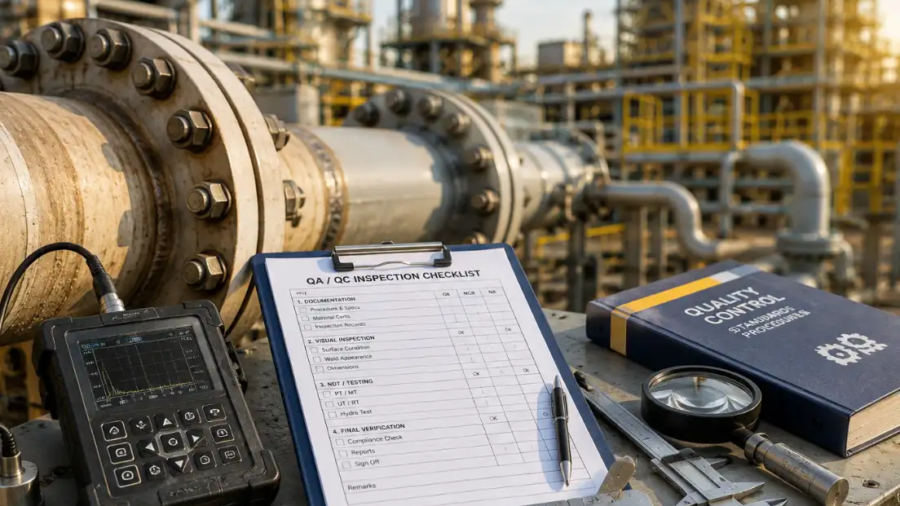
qa qc course rig offshore academy

Thinking of Joining a QA/QC Course? Here’s What to Know First

Scroll through any oil and gas job board for five minutes and you’ll run into the term QA/QC over and over. It’s on almost every listing. And that’s not a coincidence. Every pipe, weld or structure that goes into a rig or refinery has to clear strict quality checks before anyone signs off on it. Somebody has to be the one doing that checking. That’s the job. Before you enroll in the first course that shows up in a Google search though, it’s worth actually understanding what you’d be signing up for. QA/QC isn’t a side gig or a quick certificate to pad your resume. It comes with real responsibility and knowing what the field actually involves before you commit will save you a headache down the line.

QA and QC Aren’t the Same Thing

People say “QA/QC” like it’s one word, but the two halves mean different things.

Quality Assurance is the planning side. It’s about setting up processes so that a project gets built correctly from the start, following whatever standards apply. It’s preventive, in a sense. You’re trying to stop mistakes before they happen.

Quality Control is what happens after something’s built. It’s the inspection, the testing, the checking whether the final product actually matches the spec. If a weld doesn’t hold up or a material fails a test, QC is what catches that before it turns into an expensive (or dangerous) problem later.

Most courses cover both sides together and that’s the point. Understanding just one half doesn’t get you very far in this line of work.

Who Actually Fits This Career?

A lot of people assume you need an engineering degree to even consider this. Not true, at least not always. Depending on the institute, courses accept candidates with diplomas, degrees, or sometimes just a +2 qualification. A technical background helps, sure, but it’s not always a dealbreaker. What matters more is whether you’re someone who notices details other people miss. Documentation and reporting are a big part of the job, so if paperwork makes you want to run in the other direction, this might not be the field for you. But if you don’t mind that side of things and want stability in an industry that isn’t going anywhere anytime soon, it’s worth a serious look.

What Actually Gets Taught

A decent QA/QC course won’t just hand you a textbook and call it done. You should expect to work through:

  • Quality management systems, including relevant ISO standards
  • Welding inspection and material testing basics
  • Documentation, audit procedures and reporting formats
  • Industry-specific codes, particularly for oil and gas or construction
  • Hands-on inspection practice, not just classroom theory

Ask for the syllabus before you enroll anywhere. Some courses lean too heavily on theory and barely touch practical training and that gap shows up fast once you’re on an actual job site.

How Long Are We Talking?

Nobody’s asking you to commit years of your life here. Most QA/QC certifications run somewhere between a few weeks and a few months, depending on how deep the curriculum goes and whether it includes lab work. That’s part of why it appeals to people already working who want to shift careers without starting from zero again.

Is the Job Demand Actually There?

Yes, and this is really the whole reason people look into this field in the first place. Oil and gas companies, construction firms, manufacturing plants, they all need people checking that projects meet safety and quality benchmarks. Skipping that step isn’t just sloppy paperwork. It can mean safety hazards, delays and money lost, sometimes a lot of it. Once you’re certified, you’re looking at roles like QA/QC Inspector, Quality Control Engineer, Documentation Controller, or Site Quality Supervisor. And depending on your experience level, opportunities aren’t limited to India. Gulf countries continue hiring steadily for these positions too.

What to Actually Check Before You Enroll

Not every QA/QC course is worth your money, so it helps to ask a few questions first.

Is the curriculum current, or is it teaching standards that industries stopped following years ago? Does the course include real hands-on training, or is it mostly slides and lectures? Have the instructors actually worked in the field or are they teaching purely from a manual? And maybe most importantly, does the institute help with placement afterward, or do you walk out with a certificate and no direction?

Eligibility matters too. If you’re coming from a non-technical background, check whether the course is actually structured to accommodate that.

If you’re in Kerala and weighing your options, it’s worth looking into a qa and qc course in kerala that pairs solid theory with genuine practical exposure, rather than one or the other.

Where Rig Offshore Academy Comes In

This is roughly where an institute like Rig Offshore Academy fits into the conversation. Based out of Kozhikode, Kerala, they’ve been training students for oil and gas careers for a while now and QA/QC sits alongside their other core programs like NDT Level II, Fire and Safety and the Oil and Gas Diploma course. What stands out with a setup like this is the focus on actually getting hired, not just finishing a course. Faculty bring real industry experience into the room instead of reading off a syllabus and the placement support afterward removes a lot of the “okay, now what?” uncertainty that tends to follow certification programs. If you’re comparing institutes, it’s the kind of option worth putting on your list.

A Few Things Worth Being Honest About

QA/QC work isn’t flashy. There’s a lot of documentation involved, plenty of repetition and it demands patience most people underestimate going in. If you’re picturing a low-effort desk job, this probably isn’t it. But if you’re fine being the person who catches the problem before it becomes a disaster, there’s real satisfaction in that. Your work actually matters here, in a way that’s easy to point to. Also worth remembering: a certificate by itself won’t land you a job. What actually helps is how well the course prepared you practically and how much you put in beyond just attending classes, staying current with standards, getting comfortable with real inspection scenarios, that kind of thing.

Conclusion

A QA/QC course can genuinely open doors to a stable, in-demand career, but it’s not something to jump into blindly. Understand what QA and QC actually mean day to day, check that you meet the eligibility requirements and pick an institute that offers real practical training along with placement support, not just a certificate at the end of a few weeks. If you’re serious about this path, take the time to compare a few institutes. Ask about their curriculum, their placement record, whether their faculty has actually worked in the field. The right course, taught properly, can be the first real step toward a long-term career in oil and gas.
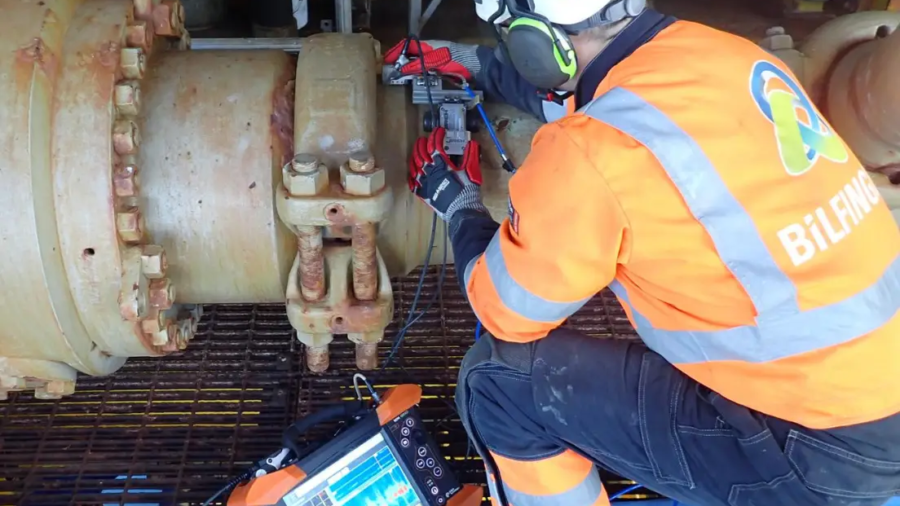
Oil and gas inspection work

QA/QC vs NDT: Understanding the Key Differences in Oil & Gas Careers

If you’re exploring a career in the oil and gas sector, you’ve probably come across two terms that sound related but actually lead down very different professional paths: QA QC and NDT. Both fields are essential to keeping oil and gas operations safe and compliant, but they involve different skill sets, daily responsibilities and career trajectories. For students trying to decide which course to enroll in, understanding these differences early can save time, money and a lot of confusion later.

In this blog, we’ll break down what QA QC and NDT actually mean, how they differ in practice, what kind of work each role involves and which one might suit your interests and career goals better.

What is QA QC?

QA QC stands for Quality Assurance and Quality Control. Though the two terms are often used together, they refer to slightly different functions within the same discipline.

Quality Assurance is a process-oriented function. It focuses on setting up systems, procedures and standards that prevent defects before they happen. A QA engineer is concerned with whether the right processes are being followed throughout a project from material selection to welding procedures to documentation.

Quality Control, on the other hand, is product-oriented. It involves inspecting, testing and verifying that the finished product or work actually meets the required specifications. A QC inspector checks welds, materials, dimensions and finished components against approved standards and drawings.

In the oil and gas industry, QA QC professionals are involved at almost every stage of a project from procurement and fabrication to installation and commissioning. They review documentation, conduct audits, coordinate with third-party inspection agencies and ensure that every stage of construction or fabrication complies with international codes and client specifications. If you’re looking to build a career in this field, enrolling in a qa qc course in calicut is a good starting point to get hands-on with these industry standards.

What is NDT?

NDT stands for Non-Destructive Testing. As the name suggests, it is a set of testing techniques used to examine the properties of a material, component, or system without causing any damage to it. This is critical in industries like oil and gas, where pipelines, pressure vessels and structural welds need to be inspected repeatedly throughout their service life without being cut open or destroyed.

Common NDT methods include:

  • Radiographic Testing (RT) – using X-rays or gamma rays to detect internal flaws
  • Ultrasonic Testing (UT) – using high-frequency sound waves to find internal defects
  • Magnetic Particle Testing (MPT) – detecting surface and near-surface flaws in ferromagnetic materials
  • Liquid Penetrant Testing (LPT) – identifying surface-breaking defects using dye penetrants
  • Visual Testing (VT) – the most basic and widely used method, involving direct visual inspection

NDT technicians are trained specifically in these techniques and are certified according to standards such as ASNT SNT-TC-1A or ISO 9712. Their job is highly technical and hands-on, requiring precision, patience and a strong understanding of material science and defect interpretation. If you want to specialize in these techniques, our ndt level ii course in Calicut covers all five methods with practical, hands-on training.

Key Differences Between QA QC and NDT

While both fields fall under the broader umbrella of quality and inspection in oil and gas, here’s how they actually differ:

1. Scope of work QA QC covers a much wider scope. It includes documentation control, process audits, vendor evaluation, procedure verification and overall project quality management. NDT, in comparison, is a specialized technical function focused purely on detecting flaws in materials and welds using specific testing equipment.

2. Skill set required A QA QC professional needs strong organizational, documentation, and communication skills, along with knowledge of quality standards like ISO 9001, API and ASME codes. An NDT technician needs strong technical and equipment-handling skills, along with the ability to interpret radiographs, ultrasonic signals and magnetic particle indications accurately.

3. Certification path QA QC professionals typically pursue courses and certifications related to quality management systems, welding inspection (like CSWIP or AWS) and ISO auditing. NDT technicians pursue level-based certifications (Level I, II and III) in specific methods such as RT, UT, MPT and LPT, governed by bodies like ASNT.

4. Career progression QA QC often leads to roles like QA/QC Engineer, QA/QC Manager, or Quality Manager, with responsibilities expanding into project-wide quality leadership. NDT careers often progress from Technician to Level II or Level III Inspector and experienced NDT professionals can also move into QA QC roles later in their careers, since NDT knowledge is valuable for quality oversight.

5. Nature of daily work QA QC work involves a mix of site visits, documentation review, meetings and audits. It’s less hands-on with equipment and more focused on oversight and coordination. NDT work is hands-on and field-intensive, often involving physically testing welds and components using specialized equipment on-site.

Which One Should You Choose?

The honest answer is that it depends on your interests and strengths.

If you enjoy working with documentation, coordinating between teams, understanding codes and standards and taking a broader view of project quality, QA QC might be the better fit. It also tends to offer a clearer path into managerial roles over time.

If you’re more hands-on, enjoy technical precision and like the idea of physically testing materials and interpreting results using specialized equipment, NDT could be more satisfying as a long-term career. NDT also has strong demand across pipeline, refinery and offshore platform inspection work.

It’s worth noting that many professionals in the industry actually build careers that combine both. Starting as an NDT technician and later moving into a QA QC role is a fairly common and respected career path, since it gives you both the technical grounding and the process knowledge needed for senior quality positions.

Salary and Job Demand: QA QC vs NDT

Salary expectations for both fields vary based on experience, certification level and location but there are some general trends worth knowing.

Entry-level QA QC roles in the Gulf region typically start with steady growth potential, since the role naturally expands into supervisory and managerial positions over time. As professionals gain experience and add certifications like CSWIP or ISO Lead Auditor, their responsibilities and pay tend to increase significantly, especially in large-scale EPC (Engineering, Procurement and Construction) projects.

NDT roles, particularly at Level II and Level III are in consistent demand across pipeline inspection, refinery turnarounds and offshore rig maintenance. Because NDT certification is method-specific and internationally recognized, technicians who hold multiple method certifications (say, both UT and RT) often find themselves more employable and better compensated than those with a single certification.

In both fields, experience in the Middle East, particularly in the UAE, Saudi Arabia and Qatar, tends to open up higher-paying opportunities compared to entry-level positions in India. This is one reason many students choose to complete their training in India before pursuing job opportunities in Gulf countries.

Common Misconceptions

There are a few misconceptions that often confuse students choosing between QA QC and NDT.

One common myth is that NDT is a “lower-level” job compared to QA QC. In reality, senior NDT inspectors, especially Level III certified professionals, often earn as much as or more than mid-level QA QC engineers, given how specialized and in-demand their skills are.

Another misconception is that QA QC doesn’t require technical knowledge. In practice, a QA QC engineer needs a solid understanding of welding processes, material properties and inspection techniques (including NDT methods) in order to review documentation and audits effectively. You can’t manage what you don’t understand.

Finally, some students believe they have to choose one path permanently. As mentioned earlier, it’s fairly common and often advantageous to start in NDT and later transition into QA QC once you’ve built a strong technical foundation.

Why Rig Offshore Academy is the Right Place to Start

Choosing the right course is just as important as choosing the right field. At Rig Offshore Academy, students get access to industry-relevant training in both QA QC and NDT, taught by experienced professionals who understand what employers in the oil and gas sector actually look for. The courses are structured to combine theoretical understanding with practical exposure, so students leave not just with a certificate, but with the confidence to handle real site conditions.

As one of the best oil and gas institute in kerala, Rig Offshore Academy has built a strong reputation for placing students in reputable companies across the Middle East and beyond. Whether you’re drawn to the documentation and process-driven world of QA QC or the technical precision of NDT, the academy’s training programs are designed to give you a genuine head start in the industry.

Conclusion

QA QC and NDT are both critical functions in the oil and gas industry, but they serve very different purposes. QA QC is about process oversight, documentation and ensuring overall project quality, while NDT is about hands-on technical testing to detect flaws without damaging materials. Neither one is inherently “better” than the other, the right choice depends on whether you’re drawn to broader quality management or focused technical inspection work.

Whichever path you choose, getting trained at an institute with strong industry connections and practical teaching methods will make all the difference in how quickly you find your footing in the field. If you’re serious about building a career in oil and gas quality and inspection, Rig Offshore Academy is a solid place to begin that journey.