If you grew up near Kerala’s coast, you’ve probably heard someone talk about “going offshore.” Maybe it was an uncle who worked on a rig near Mumbai High. Or a neighbour who spent years on a ship in the Gulf. Or a friend who came back with stories from a platform. Offshore jobs have become a popular career choice for young people in Kerala. The pay is good. The work is different from a normal desk job. And Kerala now has good training options to help people get started. But you can’t just walk into an offshore job. There are rules to follow, certificates to get and a proper timeline to plan. This guide explains what offshore jobs really are, what Kerala offers and how a complete beginner can start.
Why Kerala Has Become an Offshore Talent Hub
Kerala has always had a strong link with the sea. For generations, the state has given India many sailors, fishermen and port workers. This makes offshore work feel familiar to many people here. Add to this a large number of ITI and diploma holders, along with engineering graduates looking for something beyond IT or nursing jobs and you get a workforce that’s ready for offshore careers. There’s another reason too. Kochi and Kozhikode are well connected to major crew-change hubs. Many training centres in Kerala now offer globally recognised courses. You no longer need to move to Mumbai, Chennai, or Dubai just to get trained. A few years back, someone from Malabar had to travel out of state for basic safety training. That has changed.
What Counts as an “Offshore Job,” Exactly
People often use the term “offshore job” for anything related to rigs. But it actually covers many different roles:
Rig and platform jobs – roughnecks, roustabouts, derrickmen and drillers who work on the drilling floor. These jobs need physical strength, but they offer good growth if you stay in the field.
Fire and safety jobs – every offshore site needs safety officers, fire watch staff and HSE (Health, Safety and Environment) workers. This is one of the easier paths for beginners, since it doesn’t always need years of mechanical experience.
QA/QC inspectors – these are people who check welds, materials and equipment to make sure they meet safety standards.
NDT technicians – non-destructive testing experts who use methods like ultrasonic testing and radiography to check for damage without breaking the equipment. NDT jobs are always in demand, since rigs and pipelines need regular checking.
Marine and support crew – people who work on supply boats, tugs and crew boats that serve the rigs.
Each of these jobs needs different training. That’s the first mistake beginners make, they think “offshore job” means just one path, when it actually means many.
Basic Eligibility: What You Need Before You Apply
Most offshore companies look for the same basic things, no matter which job you want:
- You must be at least 18 years old (most companies prefer 19–20 or above for physical rig work)
- A valid passport, since most jobs involve international waters or offshore sites outside India
- A medical fitness certificate from an approved offshore doctor — this is very important and stops many candidates who skip it
- Basic Safety Training or STCW certification (this covers survival skills, firefighting, first aid and safety awareness)
- For technical roles like NDT or QA/QC, you also need a related diploma or degree, plus specific certification (like ASNT levels for NDT)
None of this happens in a day. That’s why proper training matters more than trying to figure things out on your own from random videos or posts online.
How to Actually Start: A Simple Path for Beginners
Step 1: Choose your path. Decide what interests you. Hands-on rig work, fire and safety or technical inspection work like NDT and QA/QC. Think about your education and how comfortable you are with physical work.
Step 2: Complete basic safety training first. Even for technical jobs, you almost always need basic offshore safety certification. This step also helps you check early if offshore life suits you.
Step 3: Pick a course that matches your chosen job. Many beginners waste money on generic courses that don’t actually help them get hired. If fire and safety interests you, go for a proper fire and safety course in calicut instead of a short workshop. If you want a technical role, an ndt level ii course in Kerala or a qa and qc course in kerala gives you the exact certificates recruiters look for.
Step 4: Get your documents ready early. Passport, medical certificate and training certificates should all be ready before you start applying. Don’t wait until you get a call.
Step 5: Apply through manning agencies and company job postings. Most offshore hiring in India happens through approved manning agencies. Keep your certificates updated and be ready to travel for interviews or medical checks at short notice.
What Training Actually Gives You (Beyond the Certificate)
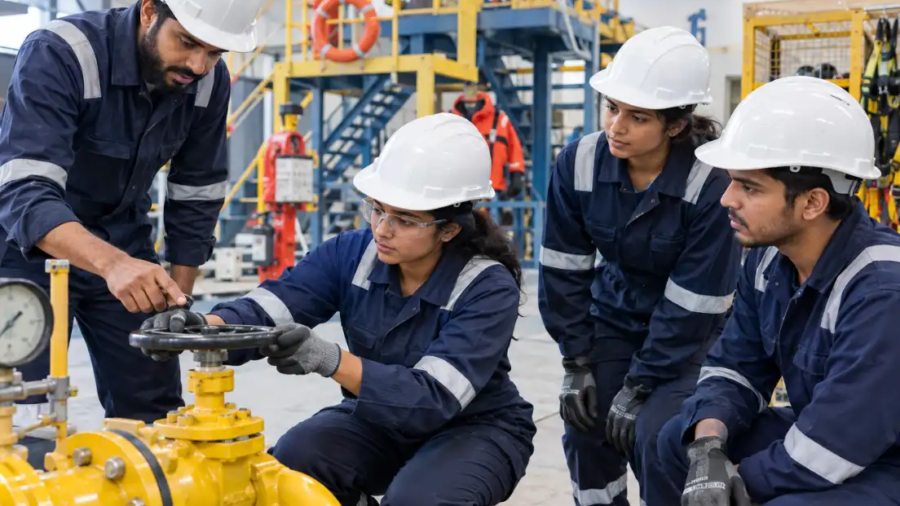
Beginners often ask if the course really matters or if it’s just about getting the certificate. The truth is, both matter. The certificate helps you pass the first screening. But the quality of your training shows later in interviews, during your first rig induction and in how fast you adjust once you’re actually working there. This is something we focus on closely at the best oil and gas institute in kerala, Rig Offshore Academy in Kozhikode. Instead of treating courses as just a formality, we focus on real, hands-on learning. Mock drills, equipment practice and real-life scenarios along with the theory needed for certification. For someone with no offshore background, this kind of training makes a big difference once they’re standing on a real platform for the first time.
Common Myths That Confuse Beginners
“You need an engineering degree for any offshore job.” Not true. Fire and safety, along with several support roles, are open to ITI holders and even non-technical graduates with the right certificate.
“Offshore work is only for men.” This is changing. More women are now working in QA/QC, NDT and support roles, both offshore and onshore.
“One certificate lasts forever.” Most offshore certificates need renewal after some time. Letting them expire is one of the most common reasons candidates lose out on jobs.
“Agencies will train you for free once selected.” Some do offer basic induction, but certificates like STCW, medical fitness and job-specific training are almost always your own responsibility beforehand.
Salary Expectations
Offshore pay depends on the job, your experience and whether it’s a domestic project (like ONGC) or an international one. Entry-level rig and safety jobs usually start with moderate pay, but it grows fast with experience and extra certificates. Technical roles like NDT and QA/QC often pay more once you build experience. Instead of focusing only on the starting salary, it’s smarter to focus on getting the right certificates first. In this field, pay usually follows skill and experience more directly than in many other industries.
Conclusion
Offshore work is not a shortcut to easy money and it’s not only for a special few people either. It’s a career with a clear path, the right basic training, the right certificate for your chosen job and the will to keep learning as you grow. With more training centres now available in Kerala, including here in Kozhikode, beginners don’t need to leave the state to get started. If you’re serious about an offshore career, the smartest step is to choose a course that matches the job you actually want, instead of collecting random certificates without a clear plan.