Picture a student holding a fresh class 10 mark sheet. Relatives are already handing out advice: take science, aim for engineering, try for a Gulf job. But he is not sure he wants four more years in a classroom, and the family budget is tight. For a student in that spot, a fire and safety course after 10th can be a smart first move. It is short, it leads to paid work and every building with people inside needs someone who knows what to do when smoke appears.
This guide explains who can join, what the training costs, which jobs open up and how one person can climb from a first job to a senior safety role.
Who Is Allowed to Join
The basic requirement is a pass in class 10. Most job-linked programmes also want you to be 18 or older, since employers rarely hire minors for site work. Fitness matters because training involves running, lifting and wearing heavy protective gear. Some institutes ask for a simple medical check as well. English helps more than people expect. Equipment labels, safety signs and exam papers are usually in English, so even basic reading ability will make the course easier. Since entry rules differ between institutes, read the conditions on the course page before applying. The Fire and Safety course at Rig Offshore Academy is the place to check its own requirements and the admissions team can tell you which programme matches your marks and age.
Short Certificate or One-Year Diploma?
This is the main decision and the answer depends on what you want from the next twelve months.
A certificate runs from a few weeks to about six months. It teaches the essentials: how fire behaves, how to use extinguishers, how to raise an alarm and how to get people out. It suits someone who needs to start earning quickly.
A one-year diploma in industrial safety goes wider. You study hazards in factories and construction sites, safety law, first aid and fire fighting together. Employers tend to trust it more because it shows commitment. If you can afford the extra months, it usually gives you a better start.
You can also add small certificates later, such as first aid or fire watch training. They cost little and make a CV look stronger.
What You Actually Do in Training
A decent programme is not all lectures. Expect a mix of classroom theory and field practice.
In class you learn why a fire needs fuel, heat and oxygen and why that knowledge tells you how to put it out. You learn which extinguisher belongs to which fire, because using water on an oil fire makes things worse. You study alarms, sprinklers, hydrants, escape routes and the basics of treating burns and smoke inhalation.
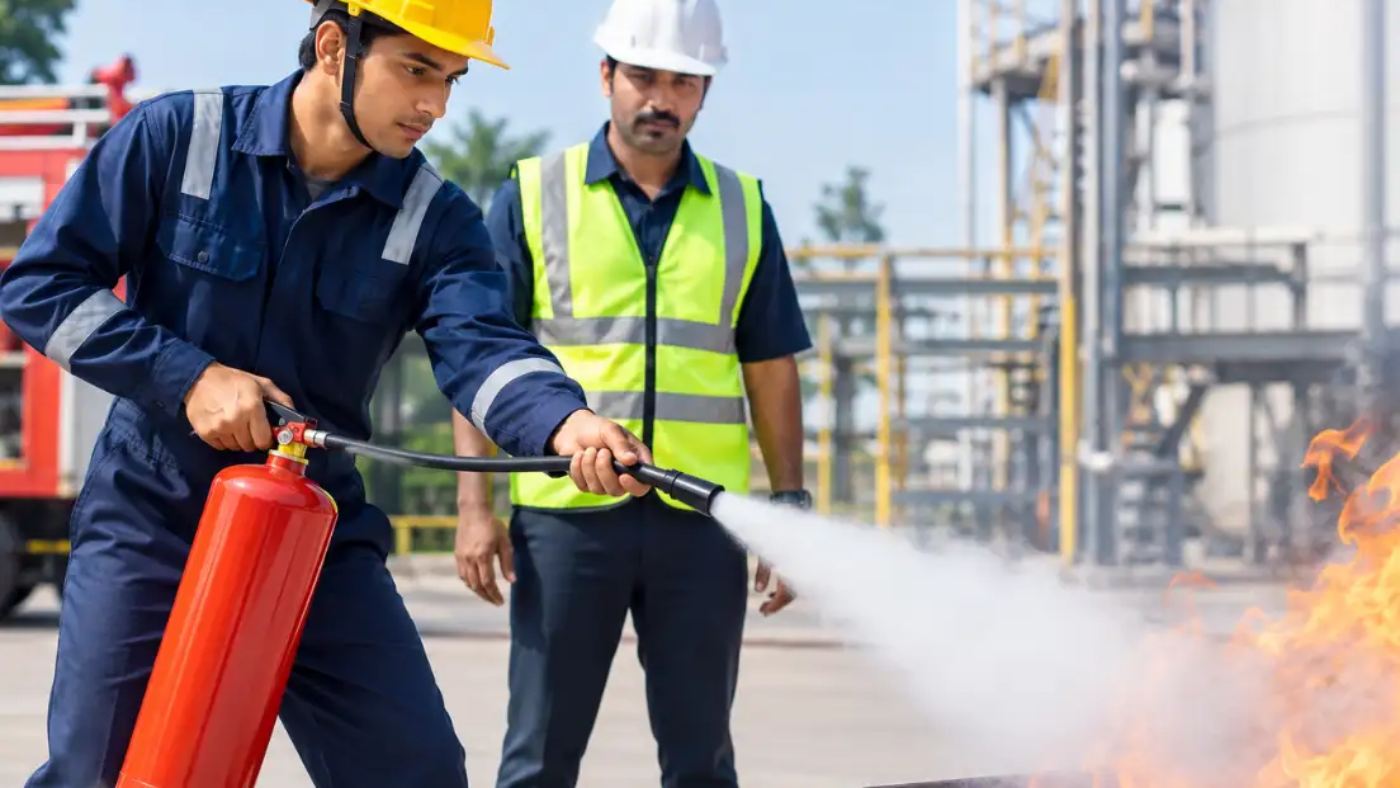
On the training ground you handle hoses, use extinguishers on controlled fires and run evacuation drills. Many students say the first live fire exercise is when the subject finally feels real. That hands-on time is also what employers ask about at interviews.
What You Will Pay
Prices vary widely, so treat these as rough guides only. Short certificates commonly sit somewhere between ₹5,000 and ₹25,000. One-year diplomas often land between ₹30,000 and ₹1,00,000. Government-run centres usually cost less than private ones. Look past the headline number. A lower fee can hide extra charges for exams, uniforms or study material. A higher fee may include live training, certificates recognised abroad and help finding a job. Ask for a written list of what is covered, then compare institutes on value rather than price. For current fees and intake dates, contact the academy directly.
The First Job and the Pay
With class 10 and a basic course, you begin at the bottom of the ladder and that is completely normal.
Common starting roles are fire watchman, safety assistant, fireman at an industrial site, safety supervisor for a building and technician who services fire extinguishers. Employers include construction companies, factories, hotels, hospitals, warehouses and oil and gas firms. Freshers in India often earn roughly ₹12,000 to ₹25,000 a month, depending on city and company. Gulf jobs pay better, but most Gulf employers expect a diploma, recognised certificates and some work history. So the realistic plan is to build experience in India first and aim abroad later.
A Realistic Five-Year Plan
Let’s walk through how one student could move forward without any magic.
Year 1. He finishes a one-year diploma and joins a factory as a safety assistant.
Years 2 and 3. He works days and studies evenings, completing class 12 through open schooling or an ITI. His employer notices that he never skips a mock drill.
Year 4. He enrols in an advanced diploma in fire and safety. With a recognised qualification and real site experience, he is now eligible for safety officer roles.
Year 5. He adds a NEBOSH or IOSH certificate. Recruiters in India and the Gulf both respect these and his pay moves well beyond where it started.
Not everyone moves at this speed and no plan guarantees a result. But the path is real and many senior safety officers began exactly this way: as helpers who kept learning.
Why Oil and Gas Pays Attention to Safety Staff
Few industries treat fire risk as seriously as oil and gas. Refineries, gas plants and offshore platforms work with flammable material around the clock, so trained safety people are required, not optional. That steady demand is one reason pay in this sector often beats ordinary building or retail security work. If this field appeals to you, learn how the whole industry fits together. The Oil and Gas Diploma course gives a wide view of plants, pipelines and operations. If you enjoy inspection work, the QA/QC course and the NDT Level 2 course show how quality and testing teams work next to safety crews on the same sites.
Training at Rig Offshore Academy
Rig Offshore Academy is an oil and gas training institute in Kozhikode (Calicut), Kerala. Its courses cover Fire and Safety, QA/QC, NDT Level 2 and an Oil and Gas Diploma and each one is built around what employers in the industry expect from new hires. If you live in Kerala and want a safety career, check the oil and gas institute in kerala to see the courses and talk to the team. Tell them your qualification and ask which programme fits, how long it takes and what support you get after finishing.
Mistakes to Avoid When Choosing a Course
Students often pick on price alone and regret it. Others join a place that never lets them touch real equipment. A third mistake is not asking where past students ended up. Before paying anything, confirm that the certificate is accepted by employers, that training includes live practice, that placement help exists and that the institute offers a way to continue into higher courses later. Ten minutes of questions now can save a year of lost time.
Conclusion
A fire and safety course after 10th is a practical way to start earning and learning at the same time. You can join with a class 10 pass, choose between a short certificate and a one-year diploma and step into roles like fire watchman, safety assistant or industrial fireman. The first salary is modest, but the field rewards people who keep adding skills and certificates. The best approach is simple. Start with a hands-on course, take your first job, study alongside work and aim for safety officer level over the next few years. Compare what each fee includes, and pick an institute that cares about your career after the final exam.
Leave A Comment