
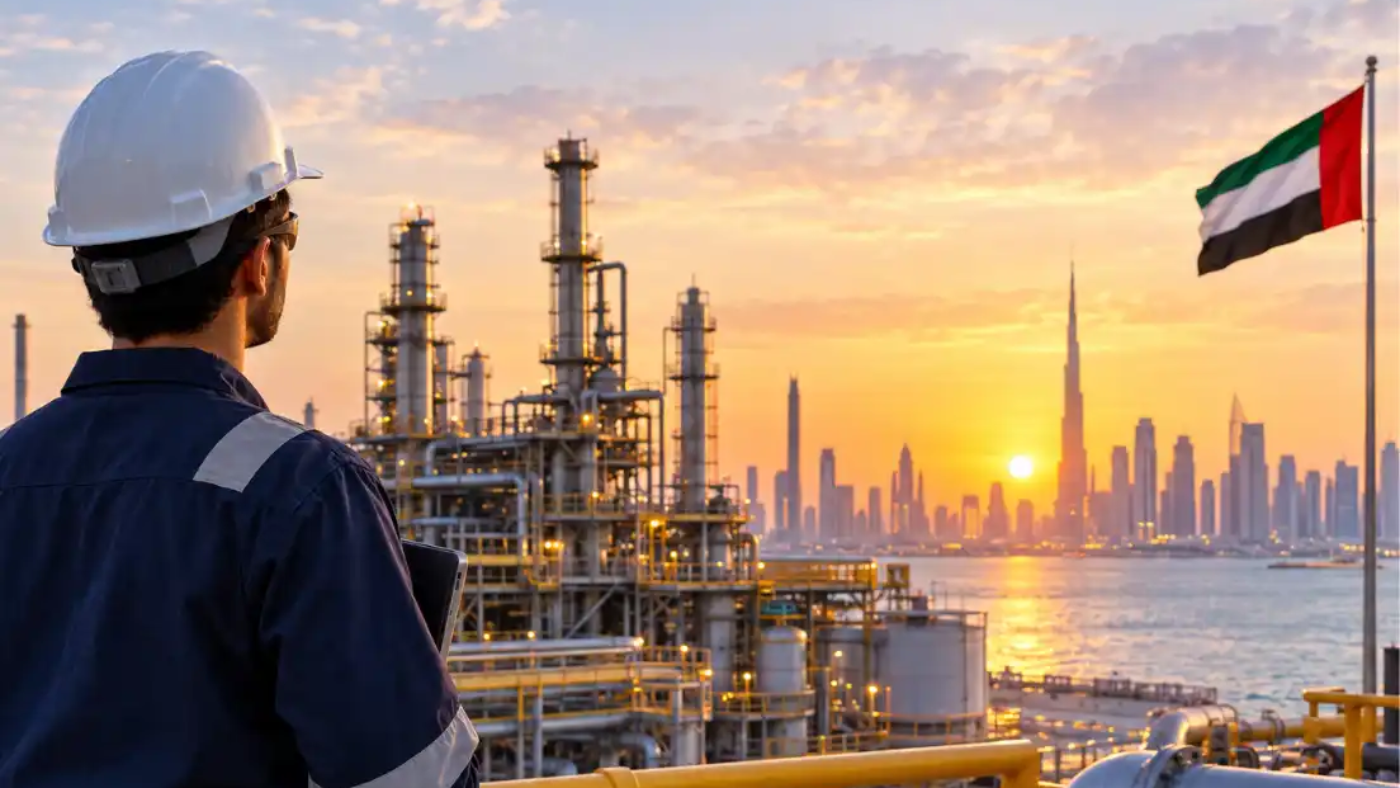
Oil and gas jobs in UAE are mostly in Abu Dhabi and Dubai. The most in-demand roles are safety officer, NDT technician, QA/QC inspector and plant operator. Pay roughly runs from AED 4,000 to 15,000 a month, tax-free. You need the right certificates and most employers like some site experience. Thinking about working in the Gulf? Good news. Oil and gas is one of the best paying fields there and it keeps hiring from India. Bad news. Many people apply without the right papers and never hear back. This guide shows you how to avoid that.
Why the UAE Hires So Many Indians
The UAE has some of the biggest oil and gas reserves in the world. Most of the work is run from Abu Dhabi. Fields, refineries and pipelines need a lot of workers and the local population is small. So companies hire from other countries. India has supplied workers for many years. Indian technicians speak English. They know international codes and standards. They are ready for long shifts away from home. Salaries are tax-free, and the flight back to Kerala is short. That is why you see so many Malayali workers on Gulf sites.
Where the Jobs Are: Oil and Gas Jobs in Abu Dhabi and Dubai
Abu Dhabi has the most jobs. ADNOC and its group companies run onshore fields, offshore platforms and the Ruwais refinery and petrochemical complex. Many contractors work around them on maintenance, shutdowns and new projects. Most postings for oil and gas jobs in Abu Dhabi come from these contractors. Dubai is different. Very little oil comes out of the ground here. But oil and gas jobs in Dubai are still easy to find on the service side. Engineering firms, inspection companies, equipment suppliers and fabrication yards near Jebel Ali hire all the time. Fujairah is a big storage and fuel supply hub, so it needs terminal and safety staff. Sharjah has gas operations and many industrial units. As a rule, Abu Dhabi pays the most. Dubai pays a little less. The northern emirates pay less again.
In-Demand Oil and Gas Roles in the UAE
Most hiring happens in four job groups.
Safety and fire – Every site needs safety people. Safety officers, HSE supervisors and fire watch staff are always in demand. This is the easiest way in for most beginners. A diploma in fire and safety helps a lot. Add an international certificate such as NEBOSH or IOSH and you stand out.
NDT – NDT means testing materials without damaging them. Pipes, pressure vessels and storage tanks must be tested before and during use. Technicians use ultrasonic, radiography, magnetic particle and dye penetrant methods. Most employers want Level 2 in at least one method. If you hold more than one, you get picked first. Good NDT Level 2 training is where you start.
QA/QC – Inspectors check that the work matches the drawings and codes like ASME, API and AWS. They check welding procedures and welder records. They also watch tests on site. Some jobs ask for coating inspection certificates like NACE or AMPP. Look at QA/QC inspector training to see what the job involves.
Operations and technical – Plant operators, piping and mechanical technicians and instrumentation staff form the biggest group. An oil and gas diploma teaches how the whole process works. Interviewers like that.
Oil and Gas Jobs in UAE Salary: What to Expect
Pay depends on the company, your certificates and your experience. Use these numbers as a rough guide only. They come from 2026 salary guides and job postings.
Junior and mid level safety officers usually earn AED 4,000 to 7,500 a month. With five years or more and a NEBOSH certificate, pay can reach AED 10,000 to 15,000.
NDT Level 2 technicians are quoted at about AED 8,000 to 15,000 a month in several guides. Advanced methods like phased array can pay even more. Small contractors often pay less, so an offer below this range is possible.
Pay for QA/QC and operations roles changes a lot from one posting to the next. Read the salary line closely for each job.
Most figures are basic salary. Housing, transport, medical cover and yearly flights are often added and that can add 30 to 50 percent. Always ask what the package includes before you compare offers. Also check overtime. Offshore work usually pays a higher overtime rate than onshore work.
Requirements for Oil and Gas Jobs in UAE for Indians
Rules differ from company to company. But these five things come up again and again.
Education and attestation. You usually need a diploma or degree in a related field. Your certificates must be attested before the visa is processed.
Technical certificates. NDT jobs need certification from a known scheme. NEBOSH or IOSH is common for safety jobs. Many QA/QC jobs ask for welding inspection certificates like CSWIP or AWS CWI.
Experience. Many postings ask for two to five years. Many also prefer people who have worked in the Gulf. If you are new, aim for junior or assistant roles first.
Medical and site training. Offshore jobs often need survival training such as BOSIET. You also need to pass a medical check.
A clean hiring process. A real employer pays for your visa and hiring costs. If an agent asks for a big payment up front, walk away. Check that the recruiter is registered before you share your documents.
How to Get Oil and Gas Jobs in UAE for Freshers
Let’s be honest. Jobs for freshers are limited. Most are junior, assistant or trainee roles. That is fine. It is a normal way to begin. Follow these steps.
- Pick one trade: safety, NDT, QA/QC or operations.
- Finish a proper certification for that trade.
- Build a clean CV with certificate numbers and dates.
- Apply for junior roles, not senior ones.
- Gain two years of site experience.
- Move to a better paying role or a bigger company.
The first two steps matter most. Employers can tell when a certificate was just collected for a CV. They want people who are ready for site work.The best oil and gas institute in kerala, Rig Offshore Academy in Kozhikode offers programs in fire and safety, NDT, QA/QC and an oil and gas diploma. All are built to get students ready for the work these employers need.
Mistakes That Cost People Jobs
Avoid these and you are already ahead. Many people apply before they have a certificate and their CVs get rejected in seconds. Others pay agents large amounts, which is the most common scam. Some send the same CV everywhere, but recruiters want the exact skills they asked for. Some let certificates expire, so check your dates every year. And many judge an offer by basic pay alone, when housing, flights and overtime change the real value.
Where to Find Openings
Start with job portals. LinkedIn, Indeed UAE, Bayt and GulfTalent all list oil and gas roles. Set job alerts for your trade. Next, check company websites. ADNOC group companies and large contractors post jobs on their own career pages. These are often the most genuine ones. Recruiters also hold direct interviews in Kochi and other Kerala cities now and then. This can work well, but check the company first. Whatever you apply to, change your CV to match the job. Mention the codes and methods you have worked with. Keep it to two pages.
Conclusion
The UAE is one of the best places for skilled oil and gas workers from Kerala. But the good jobs go to people who are ready. Pick a role that suits you. Get the certificate employers ask for. Start with a junior job if that is what is offered. Compare the full package, not just the headline salary. Be patient with the hiring process. Do that and oil and gas jobs in UAE can become a long and steady career, not just a short contract.
Leave A Comment